PROMPTS
1346 original and curated AI prompts across image, video, music, and tutorials. Browse by tool, use case, and difficulty; each entry shows its available notes and examples.
Filters2 activeExpandCollapse
 Free01
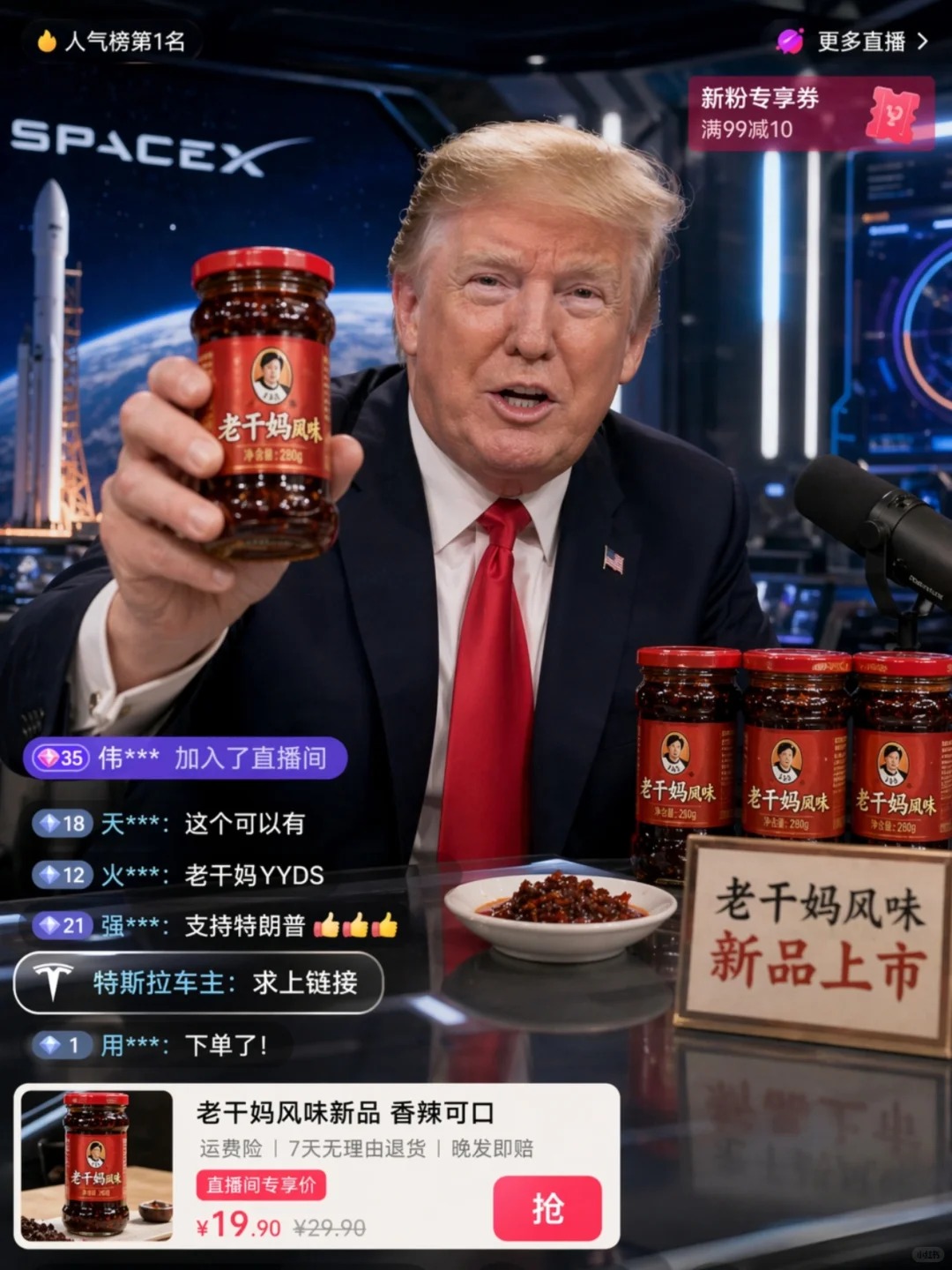
Trump Selling Lao Gan Ma on a Douyin Livestream
Trump livestreams on Douyin selling Lao Gan Ma, holding up the new "Lao Gan Ma Flavor" product. The background has that SpaceX-style tech look, with scrolling danmaku comments in the bottom left reading "Tesla owner here, drop the link!"
One-Shot Traditional Chinese Event Poster (Title, Date, Venue, No Garbled Text)
A fill-in-the-blank Traditional Chinese event poster template — title, date, venue, and a safe zone for a QR code are all laid out correctly, with no garbled characters.
Boxed Action-Figure Selfie (Accessories + Taiwan-Flavor Box Slogan)
Turns yourself into a boxed collectible action figure, complete with 3–4 accessories representing your profession and a Traditional Chinese box label with a Taiwan-flavor slogan.
Nano Banana Pro Long-Text-to-Infographic: List Key Points, Then Lay Out
Turn a passage of content into an N-panel Traditional Chinese infographic, specifying the number of columns, color scheme, font-size hierarchy, and whitespace.
Small-Business Logo + Icon Set: One Prompt for a Usable Brand Mark Draft
Ideogram 3.0's Design mode generates a clean, flat brand logo (Chinese and English side by side) plus a matching set of 6-8 icons in the same style, giving you a complete visual identity before opening a shop or taking on a client.
Neon Logo Loop
A glowing neon style with an explicit 8-second…
Photorealistic Origami Art
In the style of realism, origami art based on …
Nano Banana Pro: Long Documents to Chinese Infographics
Paste in a whole report, article, or meeting minutes and it compresses the content straight into a single Traditional Chinese infographic. No design software needed — good for slide-deck visuals, long-form social posts, and internal communication; includes a built-in guard against inventing outside information.
Nano Banana Pro 4K Product Photography (Material-Word Lighting Method)
Produces 4K e-commerce product shots without a physical studio: material words (matte finish, brushed texture) plus lighting description (softbox, fill light, shadow) are the key to a premium look. Good for listing images and homepage hero shots; fix small flaws with follow-up chat rather than regenerating.
Nano Banana Pro Conversational Editing: Background, Passersby, Outfit Swaps
No masks, no selection tools — just describe in plain language what to change. This prompt is built around the key declaration 'change only this one thing, keep everything else the same,' and the same sentence pattern covers changing backgrounds, removing passersby, or swapping outfits. If a result isn't quite right, just add another line to the same conversation instead of regenerating from scratch — much faster than starting over.
Nano Banana Pro Taiwan Street Scenes: Arcades, Scooters, Correct Signage
To generate a street scene that unmistakably reads as Taiwan, the key isn't writing 'Taiwan' — it's naming local elements like covered arcade walkways, scooters, overhead wires, and Traditional Chinese shop signs, then locking the sign text in quotes to prevent typos. Good for localized editorial imagery, presentation scenes, and social media backgrounds.
Nano Banana Pro Food Photography for Menus: Commercial-Grade Shots
Tell the model that an image 'will be used on a menu,' and it infers the professional requirements of commercial food photography on its own — an underused piece of official guidance rarely taught in Chinese-language content. The prompt builds in a 45-degree menu-style angle, blank space reserved for copy, and texture-detail declarations; it works for both small eateries and delivery-platform product photos.
Nano Banana Figurine-ify Yourself (Boxed Collectible Style)
Turns a selfie into a realistic product photo of a boxed collectible figure — one of Nano Banana's most viral tricks, built on its strongest asset: consistency.
Nano Banana Hand-Held Product Shot for E-Commerce
Turns a single cutout product image into a lifestyle-style e-commerce hero shot of a model holding the product — no reshoot needed.
Nano Banana Old Photo Restoration with Natural Colorization
Restores a yellowed, scratched, or blurry old photo to clarity and colorizes it naturally, while preserving the subject's original appearance.
Miniature World in a Glass Jar: 2026's Most Shared Tiny-World Style
Turns any subject into a miniature diorama inside a glass jar or box, plus a tilt-shift effect — one of the most-saved styles on social media in 2026.
Toy-ification: Turning a Person or Product into a Boxed 3D Figurine
The viral 2026 "toy-ification" trend: turns the person, mascot, or product in a photo into a collectible-style 3D figurine complete with packaging box — spreading fast on IG and TikTok.
GPT Image desk-workspace flat lay
For blog, Instagram, and online-course covers: a top-down workspace shot.
Flux Overhead Food Shot
Overhead food photography — wood table + natural light + scattered sides
Recraft Typographic Poster
A type-only poster composition: bold sans-serif and strong layout.
Recraft Editorial Illustration
Editorial-style illustration: flat, color-blocked, and minimal, perfect for blog imagery.
Firefly Commercially-Safe Team Photos
Commercial-safe team collaboration shots — Firefly's training data guarantees no infringement
Firefly Corporate Event Photos
Commercially-safe event shots — speakers, audiences, venues
Logo Wordmark Draft
A pure text wordmark logo for a brand — Ideogram handles letter spacing and font weight far better than Midjourney. Good for exploring initial directions and quickly aligning on style with a designer.